


Sie befinden sich hier
Inhalt
Our research examines how vascular and lymphatic networks are built, remodelled and specialised, and how they communicate with organs throughout life. We use this knowledge to understand cardiovascular disease, rare vascular malformations and regeneration, and to develop clinically relevant models and treatments.
From vascular disorders to treatment discovery
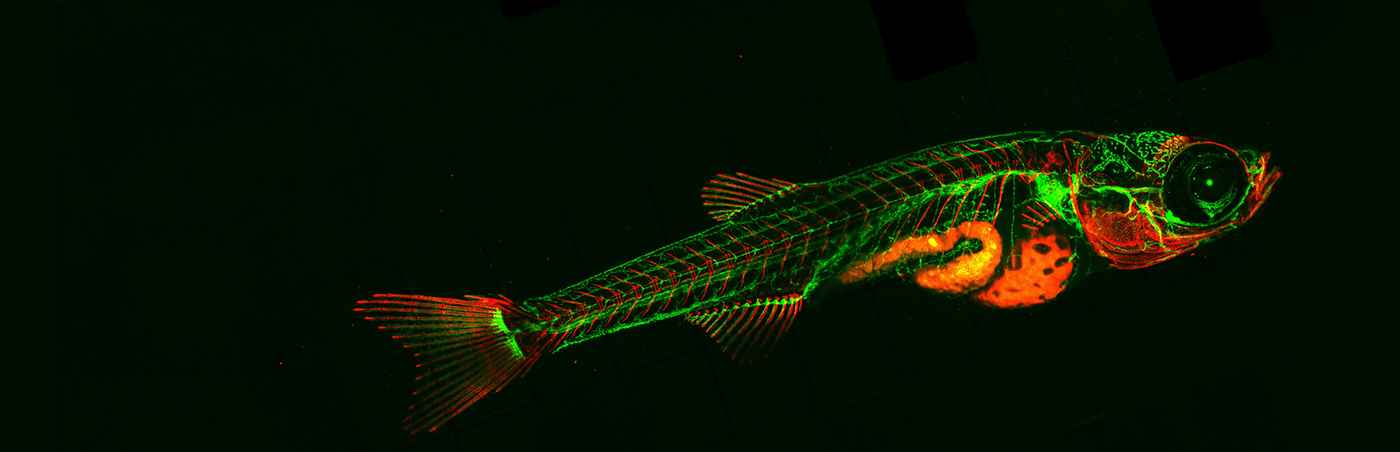
We use zebrafish, patient-derived samples and in vitro vascular models to determine how genetic mutations and dysregulated signalling cause abnormal vessel growth. Our work includes kaposiform lymphangiomatosis, cerebral small vessel disease and chronic venous insufficiency. Integrating patient genetics with functional testing in living models helps us identify mechanisms, validate targets and screen candidate treatments efficiently.
Organ specific vascular functions in health disease and repair
Blood and lymphatic vessels adapt to the organs they serve. We study how vessels communicate with immune and haematopoietic cells, neurons, fibroblasts and other stromal cells to guide development and repair. A central focus is the cardiac lymphatic vasculature and its role in clearing inflammatory signals, maintaining fluid balance and coordinating zebrafish heart regeneration. We also study vascular niches that regulate haematopoietic stem cells.
Building and remodelling specialised vascular networks
Vascular identity is more flexible than once thought. We have shown that lymphatic endothelial cells can transdifferentiate into specialised blood vessels during zebrafish development and regeneration. We investigate the molecular programmes controlling this plasticity and how developmental origin shapes later function. Longitudinal imaging and lineage tracing also reveal how embryonic networks are rebuilt into adult circulation, providing insight into congenital venous anomalies.
Methods and models
- Zebrafish genetics and CRISPR based genome editing
- Live imaging and long term lineage tracing
- Single cell and transcriptomic analysis
- Patient derived endothelial samples and in vitro vascular models
- High throughput and AI assisted drug screening
- Advanced three dimensional microscopy and tissue clearing